Showing posts with label looking closely. Show all posts

Saturday, March 1, 2014

looking closely at snow and ice

I asked Jenna Loewen's Grade 1 students at Garden City what they had noticed about snow during the week. We don't get snow very often so the students were excited to tell me about making snowballs, forts, snowmen and snow angels. When I asked them more specifically about that they had noticed about the snow, they commented that it was white and cold.
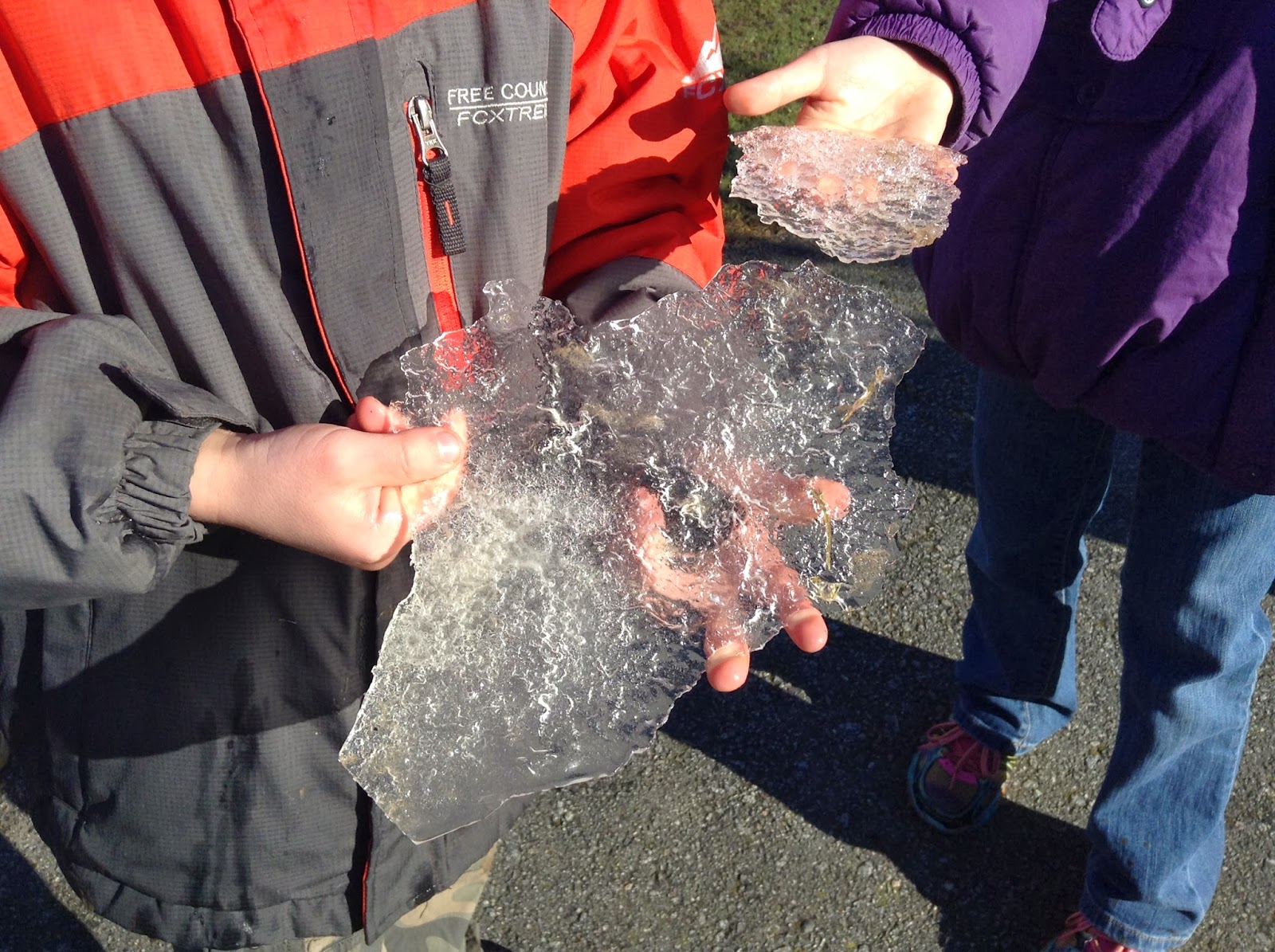
We ventured outside to look closely at what remained of our big snowfall. Most of the snow had melted by Friday but we were still able to find patches of snow which made for interesting questions as to why some snow hadn't melted yet.

I brought along a tub of magnifying glasses and loupes to help focus the students and take some time to actually look at the snow in some detail. I also had my olloclip macro lens ready to get some "zoomed in" photos. The students were also excited to find lots of ice outside.


Some students found some animal tracks in the snow and we looked across the field to find the likely matches - mallard ducks!

The students brought some ice back into the classroom and we used the zoom usb microscope to look closely at the ice. The zoomy magnifies things up to 43X so we got some really close looks at ice.


After looking closely at the snow and ice, we asked the students to share their observations and choose words to describe what they noticed...their descriptions had grown significantly from "white and cold" to: sparkly, watery, curly, shiny, crystals, golden, silver and the ice had smooth edges.

The students made some connections to some crystals they grew in their classroom:

With snow in the forecast again, maybe these students will get another chance to look closely at snow and see it from a new perspective.
~Janice

Sunday, February 9, 2014

Primary Scientists: looking closely at our practice

A large group of primary teachers in our district are taking part in the third year of Primary Scientists, a professional learning series focusing on process-based science and initially created as an implementation series to support the development of the Coast Metro Science Performance Standards. Teachers are all engaging in looking closely at one aspect of their practice in terms of science teaching and learning with an overall group focus of thinking about how we assess process and inquiry-based science experiences.

Using the science performance standards and assessment tools from the current K-7 Science IRP and the teacher resource book we are using for this series, teachers are asked to try different ways of assessing science performance tasks.

Teachers have chosen different aspects of science to focus on this year as part of their own inquiries into their professional practice: taking learning outdoors, looking closely (a national collaborative project), the processes of science, observational drawing and place-based learning using indigenous knowledge.

Based on the Looking Closely books by Frank Serafini, several of the teachers created their own versions of the books with their students. With her grade one class at Garden City, Jenna Loewen created a class book using garden photographs and having the students brainstorm what they could be.

April Chan at Blair took her students outside to look closely and create a peekaboo page with a hole cut out on the front page to take a peek at the illustration the students did of something they observed.


Sharon Baldrey and Kathleen Ellis from Lee Elementary looked closely at ice with their kindergarten classes. After freezing blue-dyed water into globes of ice, the students used salt and flashlights to investigate the properties of ice and how it melts. The teachers commented on how engaged the students were and what great inquiry questions came up during their investigations. Amazing photos of an amazing experience!


Louesa Byrne's K/1 class at Thompson looked closely at leaves in the fall and inspired by Ann Pelo's book, The Language of Art, observed and represented the leaves in using multiple forms of art materials - liquid watercolours, crayon rubbings, technical drawings with fine line markers and creating leaf forms with wire.


April Chan at Blair did a similar focused study of leaves with a small group of primary students. The students used the PicCollage app on the iPads to document the different ways they created representations of their leaves.
So as we engage our students in looking closely at the world around them, we too are looking closely at student learning in science.
-Janice

Tuesday, January 7, 2014

looking closely: what do we notice and wonder in the woods

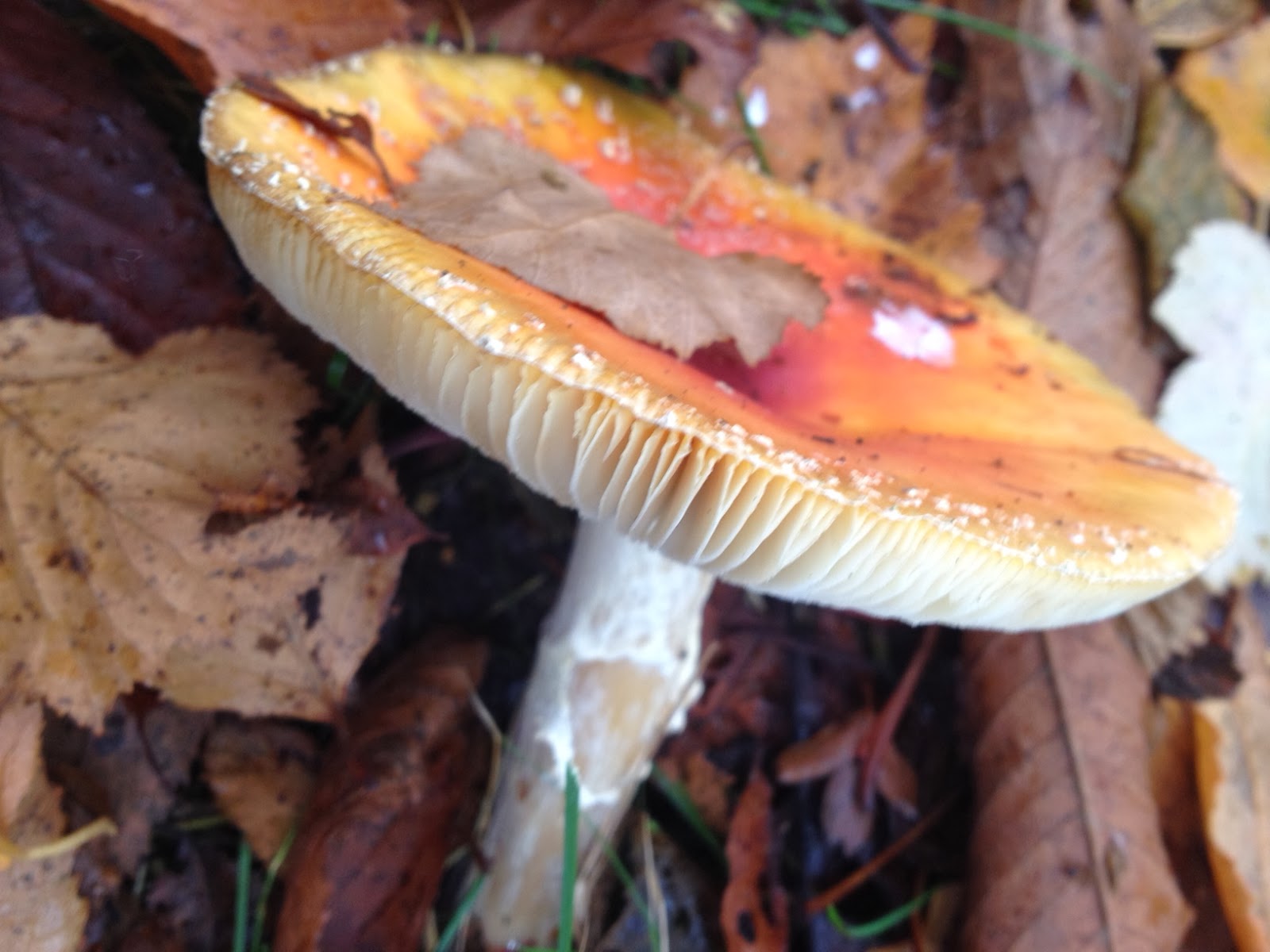
The three grades 2 and 3 classes at McNeely have been learning all about plants. Near the end of November two of the classes took the school's iPads on a little field trip to the wooded area near the school and the afternoon class had treasures from the wooded area into their class for the afternoon (it started raining at lunch and rain and iPads do not mix!). The students were asked to look closely at the plants and their different parts, noticing colour, shape, size, textures and details.  What students observed then inspired many questions.

The students took photos of plants or parts of plants, using the iPad. Many students took pictures of both moss and mushrooms although they were not sure they were plants (but were more sure about the moss because it was green!). Great openings for future inquiries!

Two apps were introduced to the students. 
They used Skitch to create labeled diagrams with the photos they took.


The students also used the ShowMe screencasting app to record what they noticed and wondered about their plants.


 It was a great day working with natural materials and technology side by side.
~Janice

Thursday, October 17, 2013

looking closely: finding treasures

The kindergarten students in Mrs. Grisdale's class at General Currie went outside on a beautiful, crisp autumn day to spend over an hour looking closely at nature's treasures. We had all sorts of amazing finds - chestnuts, acorns, leaves of all sorts, special tree bark, mushrooms and dandelions seeds.

This class spread their wings and travelled a little farther than they usually do when they go outside. General Currie has a huge park area and many older trees. The children found many many treasures and I noticed an acorn or too being quietly placed in pockets. The students were on a treasure hunt looking for acorn "hats".

This class has been working on observing using their five senses and you could really tell by the types of comments the students made - they had so many great descriptive words and great connections!

"It's like a belly button on the tree."
"English Bay" (ESL level 1 student connecting white birch bark to tree she saw at English Bay!)
"Leaves are falling from the sky."
"It is prickly."
"There was red transparent stuff stuck to the tree."
"The bark is smooth and bumpy. It's white like in the book."
"I found a rainbow of leaves."

The kindergarten students were excited to be scientists and took pride in the special tools they were given to look closely when they were outside. One little guy asked if he could use the Olloclip on my iPod Touch and after taking a few photos exclaimed, "That's like a magnifying glass for your camera!" 

I'm looking forward to working with this group of young scientists again!
~Janice